
AI AGENTS & CUSTOMER SUPPORT
AI agents and chatbots for your business and customers.
We design digital assistants that answer common questions, collect enquiries and use approved business information. Where useful, they connect to your CRM or applications and hand conversations over to your team.
An agent with a clear role and limits
LIVE SYSTEM
- 01Knowledge
- 02Reasoning
- 03Action
- 04Handover
An agent needs the right knowledge and process, not just a model.
We map requests, sources, confidence requirements and actions. When evidence is insufficient or a case is sensitive, the agent should recognise that and transfer it to a person.
What should improve
- Consistent first responses to common requests
- Retrieval from approved business knowledge
- Structured information capture before handover
- Evaluation against real scenarios
What goes into an AI agent
- A defined role, common questions and response rules
- Approved knowledge sources and a process for keeping them current
- Agreed tool connections and an action history
- Tests using realistic requests and a clear handover to your team
How we approach it
01
Scope
One job, audience, channels and a definition of done.
02
Ground and connect
Knowledge, tools, permissions and boundaries.
03
Evaluate
A test set, human review and gradual release.
A plausible answer should not be presented as certainty
We define when the agent answers, asks for clarification, declines or escalates. Suitability for personal or sensitive data requires separate legal and technical assessment.
Verified related work
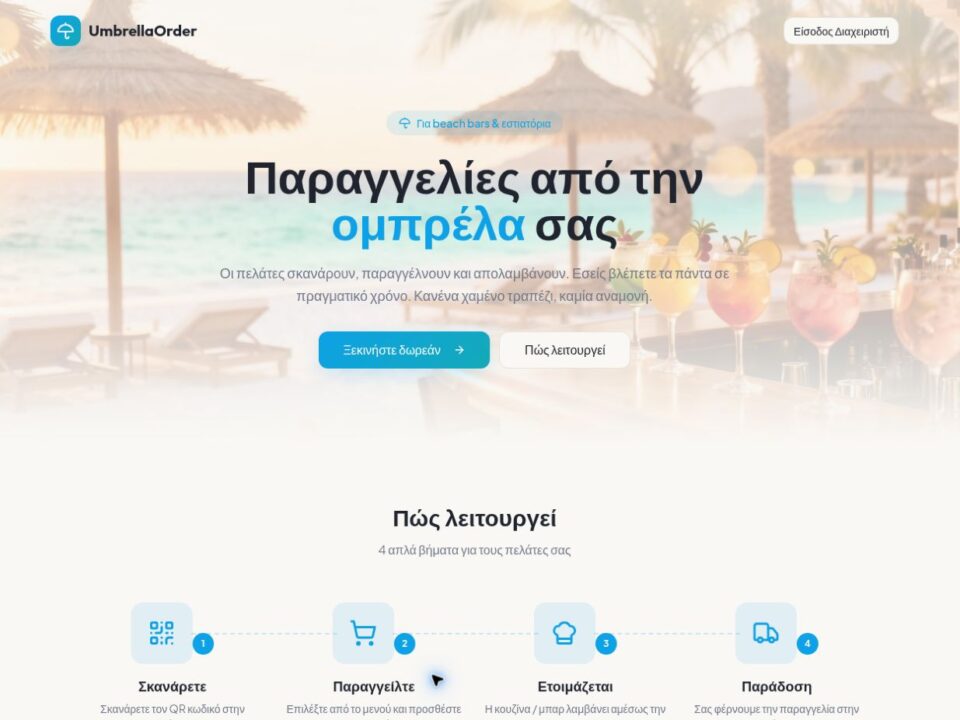
Custom Applications · SaaS Applications
UmbrellaOrder — QR ordering for beach bars
UmbrellaOrder connects a digital menu with order intake and tracking for beach bars, pool bars and…
Custom Applications · SaaS Applications
Simple Cashflow — Daily income and expense tracking
Simple Cashflow brings together a small business’s daily income, purchases and expenses. The application organises amounts…
Custom Applications · SaaS Applications
Parga Connect Hub — B2B travel reservations platform — In development
Project in development. Parga Connect Hub organises collaboration between activity providers, transfer operators, travel agencies and…
Before our first conversation
Describe your goal, the tasks that slow you down and the tools you currently use. If you already have a website or application, share its link.
Common questions
How does an AI agent differ from a chatbot?
A chatbot focuses on conversation. An AI agent can also use approved tools for defined tasks, such as creating a CRM enquiry, within the permissions and limits set for it.
Can it work in Greek and English?
Language and tone are defined for each project. We test understanding and responses using real Greek or English requests before activation.
What happens when it cannot answer?
We define when it should ask for clarification and when to hand the enquiry to a person. Your team should be able to review the conversation and continue helping the customer.
What affects the cost?
Service channels, knowledge preparation, integrations, usage and support. Initial implementation and recurring charges are described separately in the proposal.
Define one useful job for your first agent.
Share common requests, knowledge sources and the point at which a person should take over.